Distribution / Tourprograms / Time Images


Time Images


A 2000/2001, Beta SP, colour, stereo, 65 min, with english subtitles, € 200.00


Autumn '95


Pia Schauenburg
Home Sweet Home

(1 min.)

A. Binder, M. Gartner, E. Groen, R. Frimmel, R. Obrist
Autumn ’95
(17 min.)

Karolina Szmit
Kasztany

(11 min.)

Hito Steyerl
Normality 1-10

(36 min.)


Autumn '95


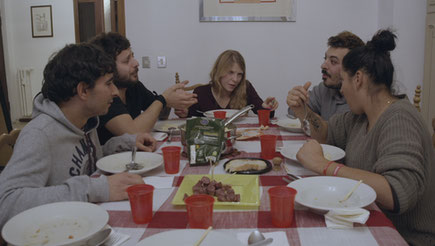
The beginning of the second program offers an adaptation of the television news in a little game with its presentation. Pia Schauenburg’s Home Sweet Home shows a montage of quick cuts of anchorman Josef Broukal, which transforms him into a later version of Max Headroom and exposes a hidden message. Whispers at home not only happen on TV. In Autumn ’95, a team of documentarians (Binder, Frimmel, Gartner, Groen and Obrist) visits a campaign event put on by the Freedom Party. Members of the audience are asked to express their political views and make suggestions for changes. And duplicates of Qualtinger* spout down-home "truths" and xenophobic cracks about foreigners: We learn that in parks, the benches are always taken, but not by "real Austrians." Finally, an ill-tempered party member by the name of Haider claims that he is "upstanding" above all else.

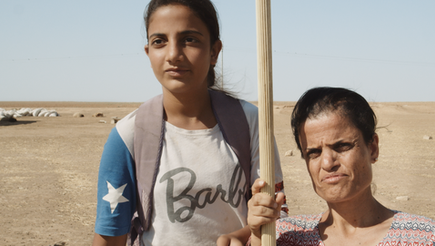
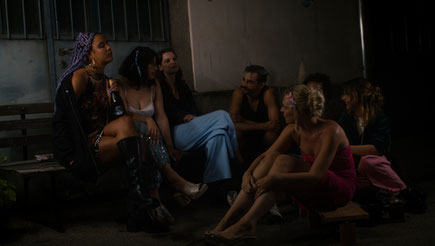
Debate in semi-darkness, not in the light also plays a role in Karolina Szmit‘s Kasztany, though where it leads is somewhat less predictable. A heated conversation, half in Polish and half in German, takes place at dusk. The subject is nationalism and the peculiarly Austrian style of xenophobia.

The Normality series by young German filmmaker Hito Steyerl, which has grown to ten parts and a total of 36 minutes, is the focus of the second program. This is a chronicle of anti-Semitic acts in Austria and Germany committed over the past three years, forming a chilling collection of current events: desecrations of Jewish graves and monuments; refugees being railroaded from one place to the next; a Minister of the Interior who denies asylum applications made by victims of right-wing attacks, the grounds being that they are "traumatized" and will therefore be "unable to assimilate"; and neo-Nazis who publicly call for "solidarity with Austria." The concept of normality, which has been virtually worn out in political rhetoric, is interpreted by Steyerl as the symbol of an ongoing undeclared war, a new and barely noticed right-wing radicalism which has become deeply embedded in our everyday lives and popular culture. Violence, according to the statement made by this film, is a method of normalization–and normality is a consequence of violence.

In a way similar to Claude Lanzmann, Hito Steyerl believes in insistently examining places, that they will begin to tell stories after one has looked long and closely enough. Other more concrete information can be found on a second level, specifically in text, which is either spoken by an off-camera voice or provided in the form of inserts. Accompanied by Schönberg’s Opus 42, Normality 1-10 attempts to be objective and achieve stylistic differentiation between the available narrative devices, which range from sparse reportage to abstraction. The filmmaker’s exploitation of all the artistic means at hand produces a sense of urgency which is rather uncommon in contemporary German-language documentary films. In the third episode, Steyerl stated her hope that this would be the last of her series. "But that will not happen by itself. Something must be done first." Normality 1-10 is a call for more courage to defend one’s convictions publicly.

(Stefan Grissemann


* Helmut Qualtinger was an author and actor who created such characters as Herr Karl, the perfect incarnation of an opportunist.


In the course of the numerous protests after formation of the current Austrian government, a coalition of the People’s and Freedom parties, a group of professionals and amateurs in the field of film and video was formed spontaneously. They produced and collected works which either critically examine the country’s political and social situation or were created as a reaction to the Freedom Party’s role in the government. These films were presented and discussed, both in Austria and abroad, as part of a program entitled "The Art Form of the Hour is Resistance."

Some of the videos in this program (*) were created in this context. We would like to thank the collective "The Art Form of the Hour is Resistance" for their support in obtaining the individual works.


* Home Sweet Home, Autum '95