

Vulcanology of the Emotions
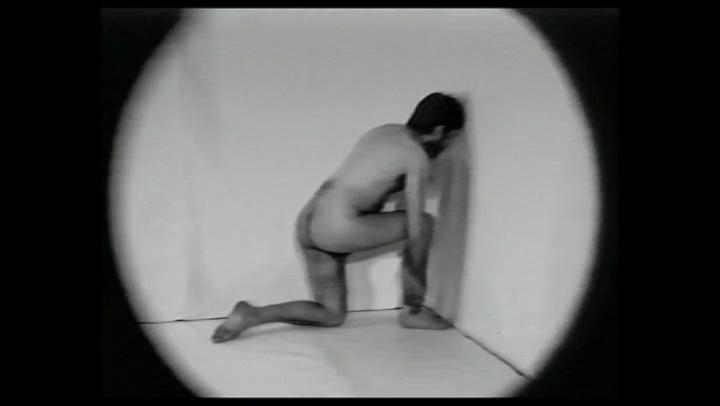
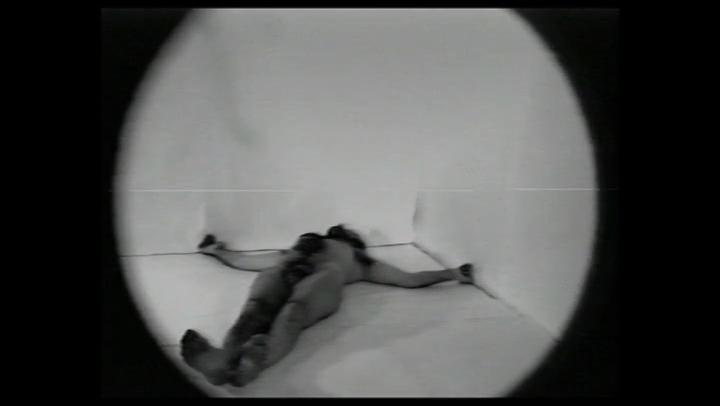
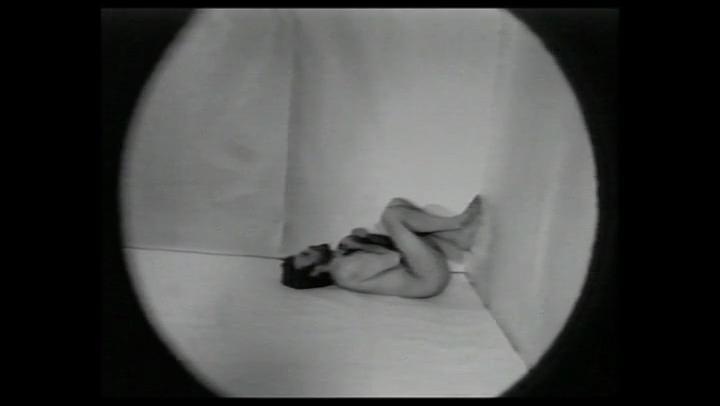
In the project Lage vor Ort [Position on the Ground] (1970), the public steps into a gallery and on a monitor sees the image of a man lying in the gutter. The human body is fit in and adjusted to a corner, the space between street and sidewalk, and thus a volume in relation to city architecture. His physical expressiveness is apparently reduced to nothing, but given the context and configuration (in the gutter), the position of the body gains enormous social expressiveness. I treated the body as abstract, geometric body, as a volume that can assume various positions in the environment. I transferred the triangle of the surroundings (x, y, z coordinates) to the body itself. The more complex the position of the body in the spatial triangle, the more complex the geometry of the body itself. A great range of mental and spiritual emotions and modes of expression were produced through geometric configurations of the body in relation to its surroundings, from meditative to despairing, from catatonic to hyperactive. Like a logician I wanted to deliver an axiom of emotional expression, an equivalence class of bodily positions and spiritual contents, meaning falsifiable modes of expression. I wanted to create an objective, evolutionary basis for a theory of the physiognomy of expression. The positions of the body only follow rules of geometry and express nothing. The emotional expression arises purely through our interpretation, resting upon the inheritance of our animal predecessors: The more complex the geometry of the body, the stronger its expression. Spatial positions constitute an alphabet of body language. Spatial geometry expresses emotion: the more complex the spatial position, the more complex the emotional expression. (Peter Weibel)
Vulkanologie der Emotionen
1971 - 1973
Austria
7 min 18 sec