

The God That Destroys
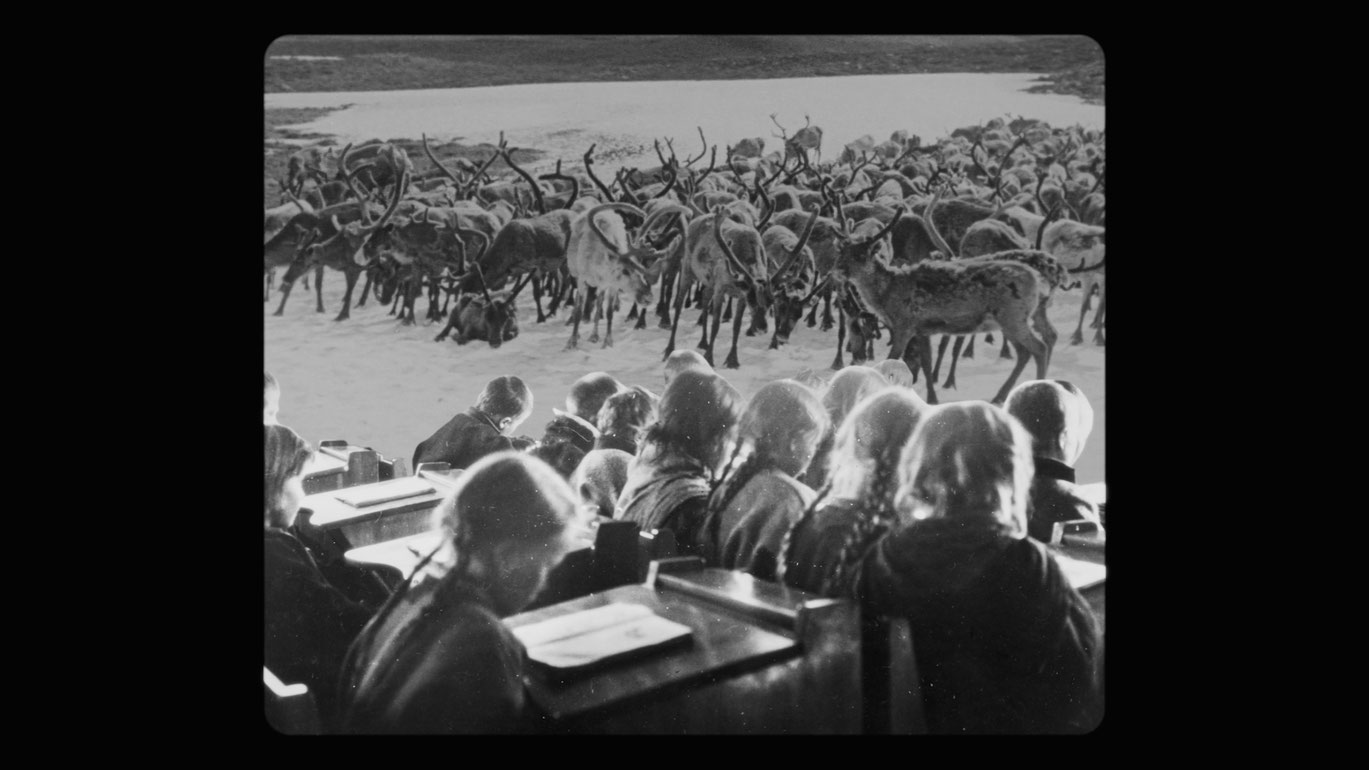
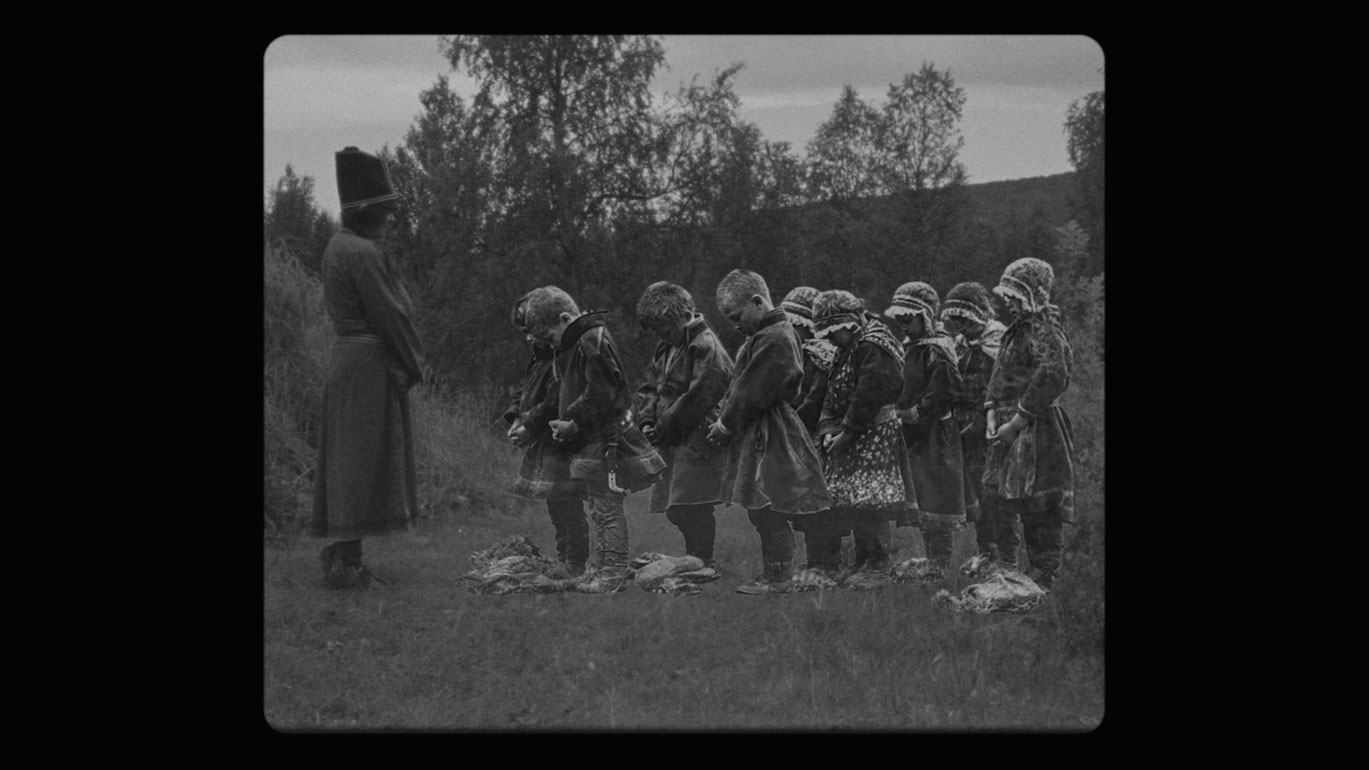
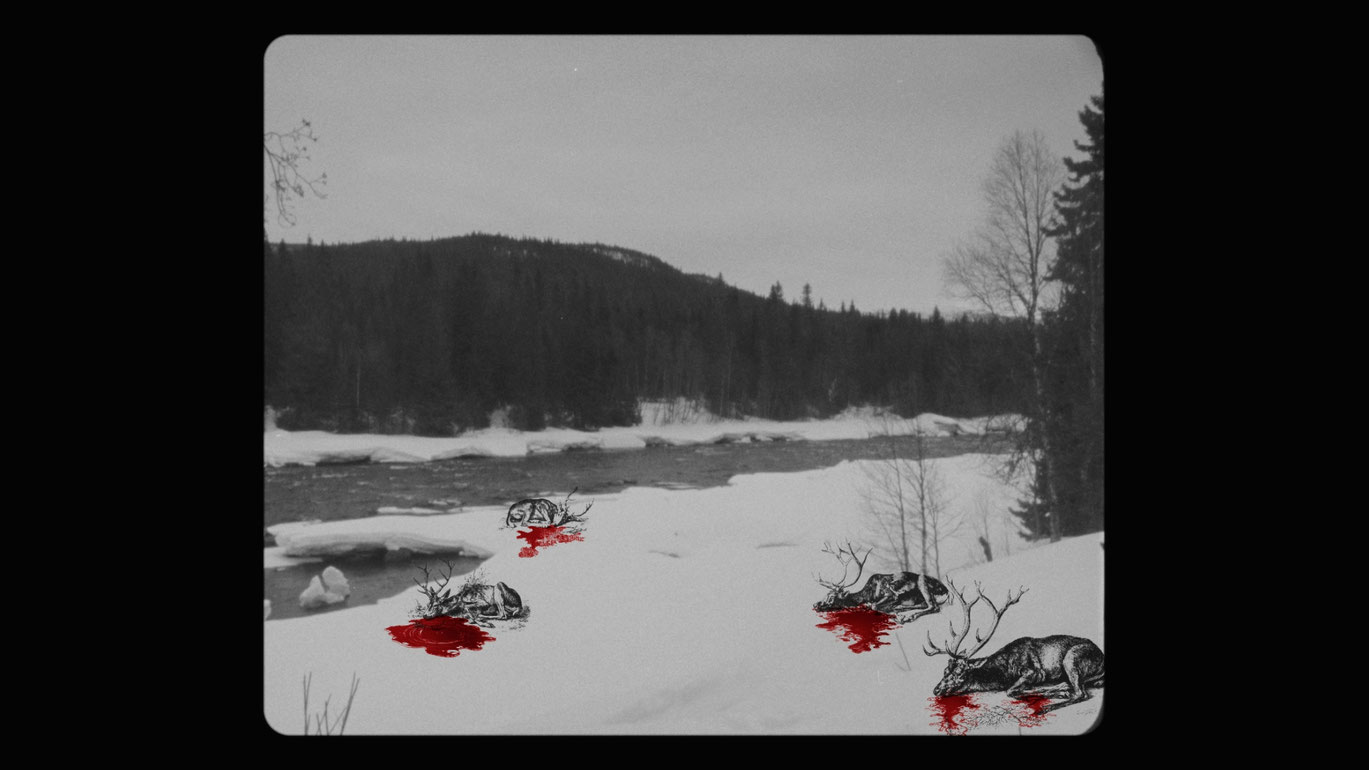
The God That Destroys looks at the legacy of Swedish colonialisation of the Sámi people as an ever-perpetuating cycle of forced assimilation, cultural oppression and extractivist exploitation. Jyoti Mistry uses archival sources from the first half of the 20th century, newly shot 16mm footage that mimics the archive and animation to create a tapestry that intertwines Sámi cosmology with commentary on capitalist destruction. The story is told by the Siren of the Future, performed by Sara Ajnnak through traditional Sámi yoik and voice over as well as original songs performed by the Gothenburg Opera´s Children´s Choir.
This film is not an exploration of Sámi cultural identity but comes from a position of solidarity and shared experiences that Jyoti Mistry brings from her own experience of growing up in and being schooled during apartheid South Africa. By introducing an outsider´s perspective to this history as well as putting this legacy of oppression into a bigger global colonial context, the film is a comment on the cyclic nature of exploitation. (Director's Statement)
The God That Destroys is a cinematic exploration of the way in which temporality continues to reverberate – in this case, regarding the unhealed scars of the Sámi people from Swedish colonization. Jyoti Mistry establishes a relationship of solidarity with Sámi tradition and worldview, making their marks tangible by situating the echoes of oppression within a broader colonial context.
The White man has robbed time of its circular motion, imposing upon it a linear, measured order: an order that counts, classifies, and takes. Mistry evokes this ongoing sense of having been robbed. Temporal recurrence becomes tangible through repetition: for example, in the portrait of the Sámi woman, who stands in the center as messenger, as go-between, and as a mediating force indispensable to the colonial apparatus.
“Our world is many worlds” runs as a refrain through the voice-over. Bird calls and waterways keep alive a multilayered conception of time, even as colonial incursion seeks to subjugate it – to the point of silencing the drum sound that carries this world.
Imposed Christianity – church, cross, obedience – and the education system – books, blackboards, classrooms, teacher, children – inscribe themselves in bodies and the world. They permeate the state’s narrative of a hierarchy of forms of knowledge and being. Gifts bind instead of give; they pave the way for access. Surveying becomes land theft, becomes expropriation. The patriarchal God disrupts time.
By using archival material from the first half of the 20th century, newly shot 16mm film footage from Dearna (Tärnaby), and animated sequences, Mistry interweaves Sámi cosmology with capitalist destruction. Photographs, films, and portraits present a historicity of the image, as we see flags, water, and intrusion in the form of red blood and reindeer dead in the white snow. Greed for resources makes Sámi self-determination impossible. Accompanied by a children’s choir and yoik, the traditional song of the Sámi, the harbinger of the future reminds us: This story is not a tale, but a warning. Braiding, weaving, knotting. The trees cry out. The mountains roar. Whispering, persistent: Oda nama – Call me by my name. (Doris Posch)
Translation: John Wojtowicz
The God That Destroys
2026
Austria, Sweden
17 min