

Branches Reaching Up to the Sky
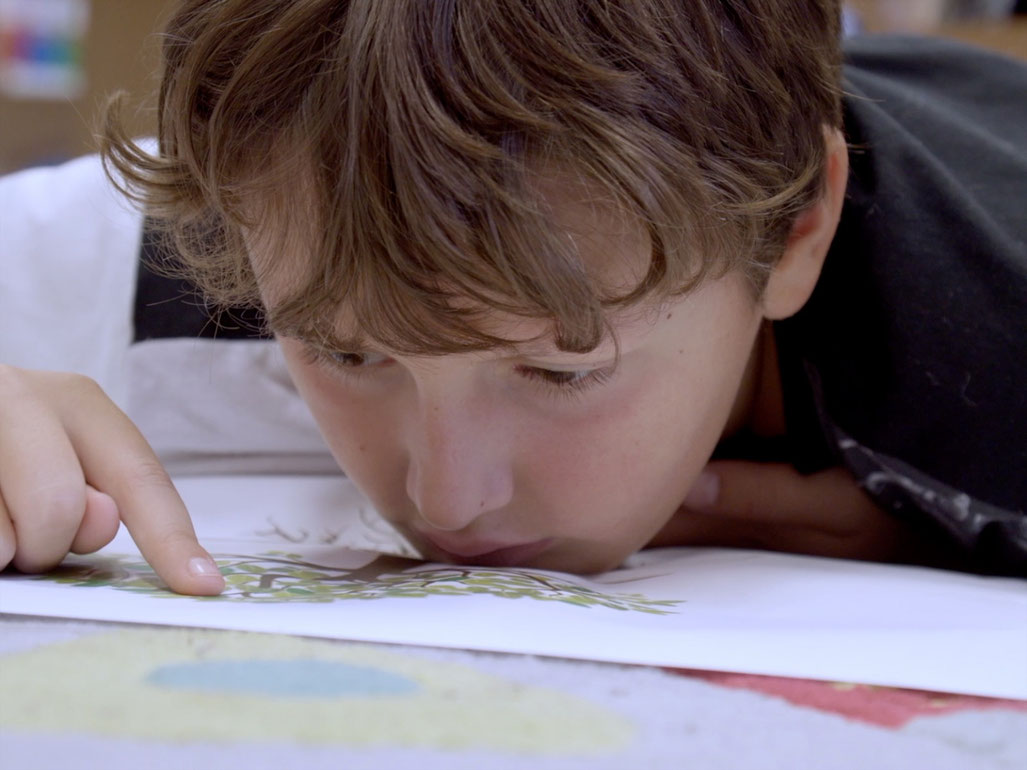
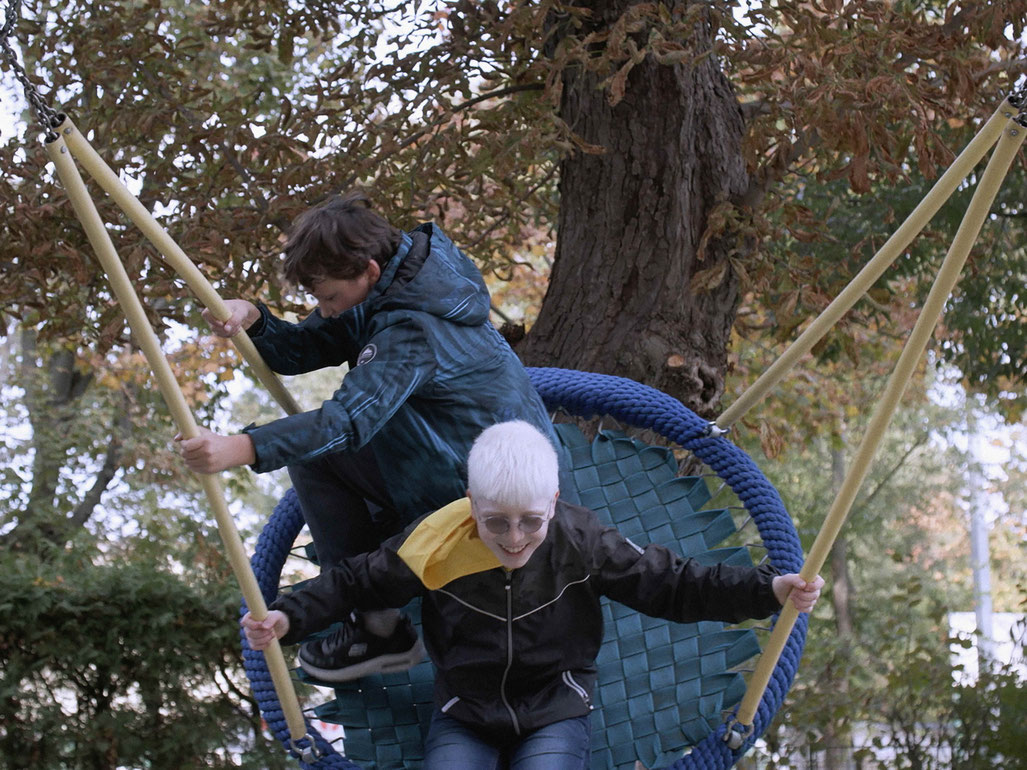
At a school in Vienna, blind and visually impaired children and teens learn through hearing and touch. With particular attention to sound, Katharina Copony explores their world in her last film, opening up the film to a space of sensory experience. When writing, composing poems, playing soccer, and walking through the institute and public space, sounds, music, rhythms, and materialities move to the center of awareness. A film about connections: between image and sound, absence and presence, and self, community and world. (Diagonale 2026)
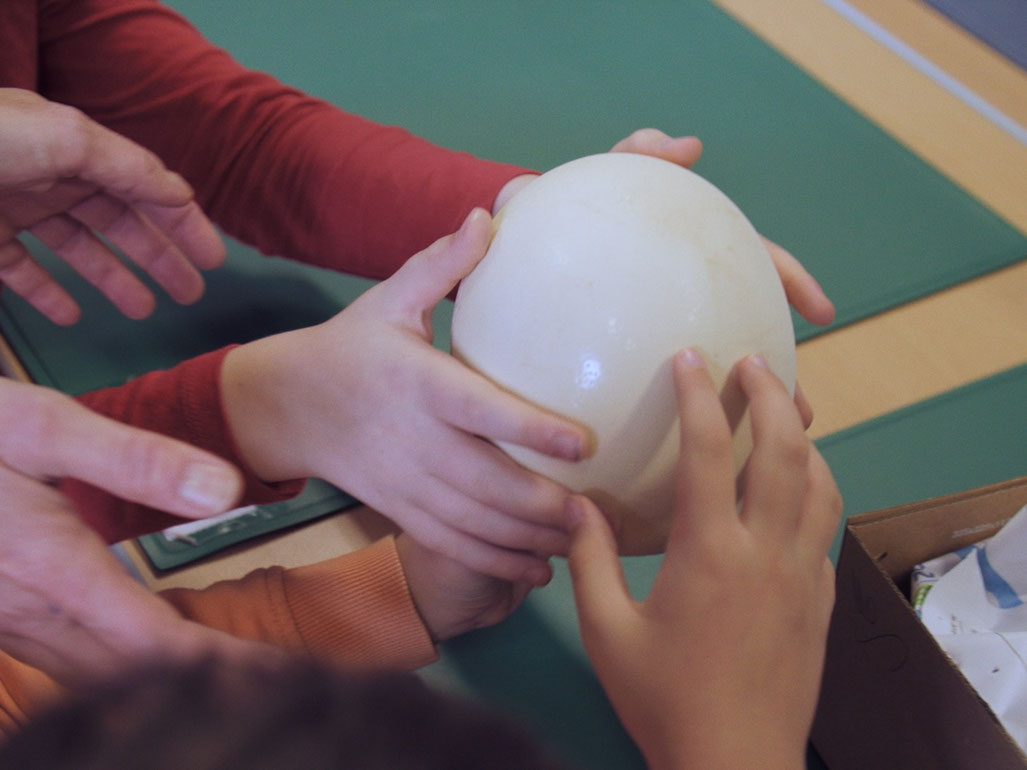
Clicks softly emanate from tilted heads. An echo chamber unfolds in the stairwell. Hands gently stroke leaves. Could the leaves of the trees also be painted with ballpoint pens? Further questions allow a careful examination of the world: What color is a memory? Why does an ostrich egg sound like a lamp, while a pigeon’s egg sounds like a stone?
Sensory experiences from a world full of surfaces and sounds, movements, and shifting light conditions all blend together. Children and adolescents explore these concrete impressions; occasionally, memories of dreams infuse their perception of the moment. “In my dreams, when I remember them, there are no smells – there’s simply nothing. But there are rooms in my dream. I can distinguish between light and dark in my dreams. I mostly dream about what I think about during the day.”
Branches Reaching up to the Sky follows the day-to-day learning experiences of young people who are blind or visually impaired, whose range of experience extends far beyond Braille and white canes. This sensitive documentary is by no means a narrative of obstacles and impossibilities. Instead, Katharina Copony focuses on the diverse ways of relating to the world, navigating it, and finding one’s place within it: inquisitive explorations through music, poetry, physical contact, sports, echolocation and, not least, friendship.
In Branches Reaching up to the Sky the relationship between images and sounds is never structured with the intention of conveying the way that the children perceive them (because this would be impossible in any case). Instead, editing and sound design highlight the unique qualities of visual and auditory sensations, as the film playfully explores their relationship to one another. This presents an impetus not only to find new forms of expression, but also to open one’s mind to the many ways of world-building: “In my dreams, many things that are going to happen soon are changed.” (Lisa Heuschober)
Translation: John Wojtowicz
Mit Ästen bis zum Himmel
2026
Austria
86 min
Documentary
German, English
English, AD (deutsch), Closed Captions (german)